 by
by Championship MVP recognition becomes a permanent career identifier.
The college football playoff national championship mvp winners list 2026 documents players whose identities fused with their highest-pressure performances.
Regular-season awards recognize sustained excellence across varying competition levels.
Championship MVPs capture single-game dominance when national attention peaks.
The distinction shapes how careers are remembered decades later.
Title game visibility creates lasting narrative frameworks.
MVPs become program symbols and recruiting touchstones.
Their performances define coaching legacies and establish program timelines.
College Football Playoff National Championship MVP Winners List 2026
This historical record tracks players who transformed one-night excellence into permanent recognition.
2026 CFP National Championship MVPs: Historic Night for Indiana
Championship Context
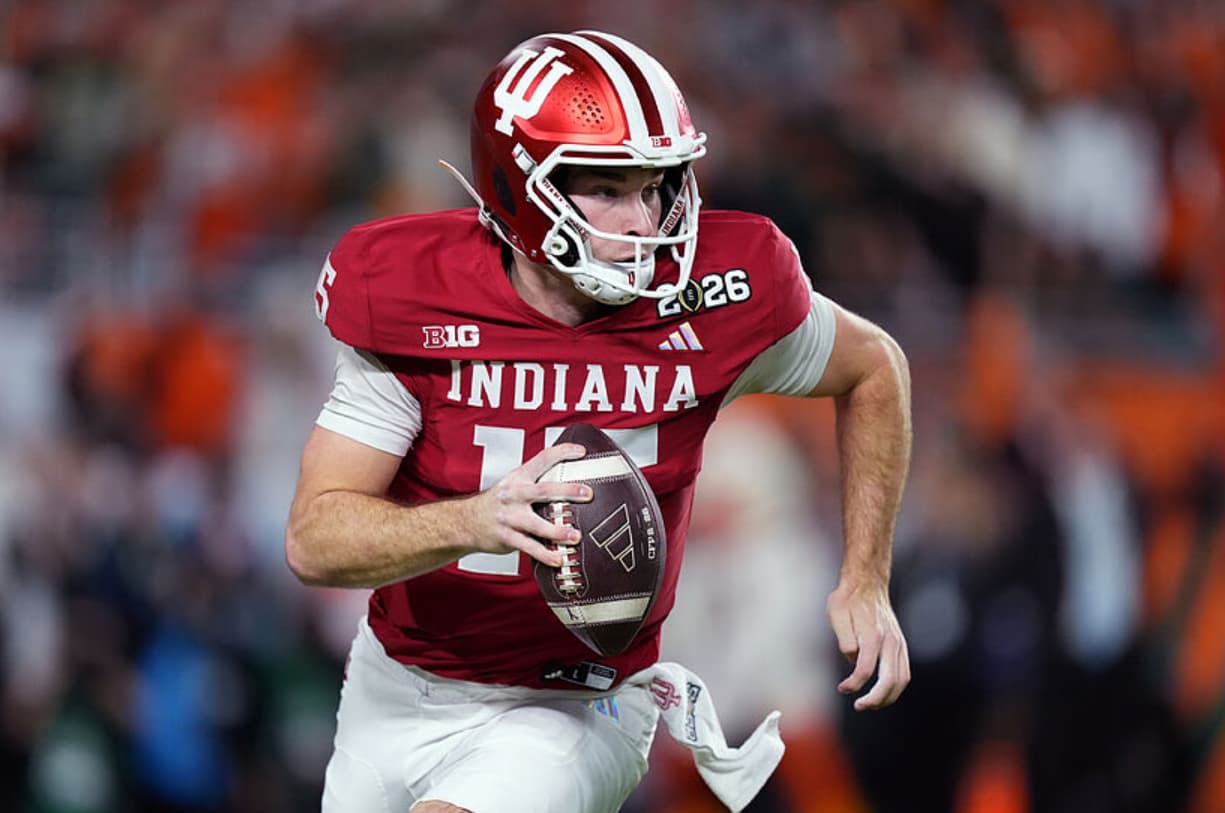
Indiana Hoosiers defeated Miami Hurricanes 27–21, completing a 16–0 season. The victory delivered Indiana’s first national championship and established both college football national championship 2026 mvp winners as program legends overnight.
Offensive MVP Career Implication
Fernando Mendoza (QB, Indiana) secured his place in Indiana football history through championship composure.
- Demonstrated leadership that validated his transfer decision and program commitment
- Controlled game tempo through third-down conversions and situational awareness
- Added rushing touchdown that showcased dual-threat capability at critical moment
- Created NFL draft narrative centered on championship poise under maximum scrutiny
Defensive MVP Career Implication
Mikail Kamara (DE, Indiana) produced the defining play of his collegiate career.
- Third-quarter punt block directly changed game trajectory and momentum
- Applied consistent edge pressure that forced quarterback decision-making errors
- Showcased explosive athleticism that elevates professional projection
- Established reputation as impact player in highest-stakes situations
Program Profile Elevation
Indiana’s dual-MVP performance represents institutional transformation. Programs that produce both MVPs demonstrate comprehensive roster construction and developmental systems. The recognition permanently alters recruiting conversations and media positioning.
Single-program MVP sweeps occur infrequently. When they happen, they signal generational program moments that define decades of identity.
CFP National Championship MVP Winners from 2015 to 2026
Swipe left or right on mobile to view complete table.
<div style=”overflow-x:auto;”> <table style=”width:100%; border-collapse:collapse; border:2px solid black;”> <tr style=”border:2px solid black;”> <th style=”border:2px solid black; padding:8px; text-align:left;”>Season</th> <th style=”border:2px solid black; padding:8px; text-align:left;”>Offensive MVP</th> <th style=”border:2px solid black; padding:8px; text-align:left;”>Team</th> <th style=”border:2px solid black; padding:8px; text-align:left;”>Defensive MVP</th> <th style=”border:2px solid black; padding:8px; text-align:left;”>Team</th> </tr> <tr style=”border:1px solid black;”> <td style=”border:1px solid black; padding:8px;”>2015</td> <td style=”border:1px solid black; padding:8px;”>Ezekiel Elliott (RB)</td> <td style=”border:1px solid black; padding:8px;”>Ohio State</td> <td style=”border:1px solid black; padding:8px;”>Tyvis Powell (S)</td> <td style=”border:1px solid black; padding:8px;”>Ohio State</td> </tr> <tr style=”border:1px solid black;”> <td style=”border:1px solid black; padding:8px;”>2016</td> <td style=”border:1px solid black; padding:8px;”>O.J. Howard (TE)</td> <td style=”border:1px solid black; padding:8px;”>Alabama</td> <td style=”border:1px solid black; padding:8px;”>Eddie Jackson (S)</td> <td style=”border:1px solid black; padding:8px;”>Alabama</td> </tr> <tr style=”border:1px solid black;”> <td style=”border:1px solid black; padding:8px;”>2017</td> <td style=”border:1px solid black; padding:8px;”>Deshaun Watson (QB)</td> <td style=”border:1px solid black; padding:8px;”>Clemson</td> <td style=”border:1px solid black; padding:8px;”>Ben Boulware (LB)</td> <td style=”border:1px solid black; padding:8px;”>Clemson</td> </tr> <tr style=”border:1px solid black;”> <td style=”border:1px solid black; padding:8px;”>2018</td> <td style=”border:1px solid black; padding:8px;”>Tua Tagovailoa (QB)</td> <td style=”border:1px solid black; padding:8px;”>Alabama</td> <td style=”border:1px solid black; padding:8px;”>Daron Payne (DT)</td> <td style=”border:1px solid black; padding:8px;”>Alabama</td> </tr> <tr style=”border:1px solid black;”> <td style=”border:1px solid black; padding:8px;”>2019</td> <td style=”border:1px solid black; padding:8px;”>Trevor Lawrence (QB)</td> <td style=”border:1px solid black; padding:8px;”>Clemson</td> <td style=”border:1px solid black; padding:8px;”>Trayvon Mullen (CB)</td> <td style=”border:1px solid black; padding:8px;”>Clemson</td> </tr> <tr style=”border:1px solid black;”> <td style=”border:1px solid black; padding:8px;”>2020</td> <td style=”border:1px solid black; padding:8px;”>Joe Burrow (QB)</td> <td style=”border:1px solid black; padding:8px;”>LSU</td> <td style=”border:1px solid black; padding:8px;”>Patrick Queen (LB)</td> <td style=”border:1px solid black; padding:8px;”>LSU</td> </tr> <tr style=”border:1px solid black;”> <td style=”border:1px solid black; padding:8px;”>2021</td> <td style=”border:1px solid black; padding:8px;”>DeVonta Smith (WR)</td> <td style=”border:1px solid black; padding:8px;”>Alabama</td> <td style=”border:1px solid black; padding:8px;”>Christian Barmore (DT)</td> <td style=”border:1px solid black; padding:8px;”>Alabama</td> </tr> <tr style=”border:1px solid black;”> <td style=”border:1px solid black; padding:8px;”>2022</td> <td style=”border:1px solid black; padding:8px;”>Stetson Bennett (QB)</td> <td style=”border:1px solid black; padding:8px;”>Georgia</td> <td style=”border:1px solid black; padding:8px;”>Lewis Cine (DB)</td> <td style=”border:1px solid black; padding:8px;”>Georgia</td> </tr> <tr style=”border:1px solid black;”> <td style=”border:1px solid black; padding:8px;”>2023</td> <td style=”border:1px solid black; padding:8px;”>Stetson Bennett (QB)</td> <td style=”border:1px solid black; padding:8px;”>Georgia</td> <td style=”border:1px solid black; padding:8px;”>Javon Bullard (DB)</td> <td style=”border:1px solid black; padding:8px;”>Georgia</td> </tr> <tr style=”border:1px solid black;”> <td style=”border:1px solid black; padding:8px;”>2024</td> <td style=”border:1px solid black; padding:8px;”>Blake Corum (RB)</td> <td style=”border:1px solid black; padding:8px;”>Michigan</td> <td style=”border:1px solid black; padding:8px;”>Will Johnson (CB)</td> <td style=”border:1px solid black; padding:8px;”>Michigan</td> </tr> <tr style=”border:1px solid black;”> <td style=”border:1px solid black; padding:8px;”>2025</td> <td style=”border:1px solid black; padding:8px;”>Will Howard (QB)</td> <td style=”border:1px solid black; padding:8px;”>Ohio State</td> <td style=”border:1px solid black; padding:8px;”>Cody Simon (LB)</td> <td style=”border:1px solid black; padding:8px;”>Ohio State</td> </tr> <tr style=”border:1px solid black;”> <td style=”border:1px solid black; padding:8px;”>2026</td> <td style=”border:1px solid black; padding:8px;”>Fernando Mendoza (QB)</td> <td style=”border:1px solid black; padding:8px;”>Indiana</td> <td style=”border:1px solid black; padding:8px;”>Mikail Kamara (DE)</td> <td style=”border:1px solid black; padding:8px;”>Indiana</td> </tr> </table> </div>
Legacy Observations:
- Joe Burrow, Trevor Lawrence, and Deshaun Watson transformed CFP National Championship MVP Winners from 2015 to 2026 recognition into NFL franchise-quarterback status—their championship performances became career-defining narratives
- Alabama, Clemson, and Ohio State built dynasty reputations through repeat MVP production—the college football playoff national championship mvp winners list 2026 2022 and college football playoff national championship mvp winners list 2026 2023 periods saw Georgia join this elite group through back-to-back titles
- Defensive MVPs often define championships through singular moments rather than statistical accumulation—Patrick Queen’s coverage and Christian Barmore’s interior dominance created lasting program memories
- The 2024 National Championship MVP Blake Corum and National Championship MVP 2025 Will Howard represent Big Ten resurgence that preceded Indiana’s 2026 breakthrough—regional momentum built across consecutive seasons
- Indiana’s 2026 appearance marks the first program outside traditional powers to claim both MVPs since Michigan in 2024—new entrants challenge established hierarchy
Why CFP MVPs Matter?
Championship MVP status permanently shapes career trajectories and historical positioning.
Draft Narratives
- College MVP Football recognition creates draft-day storylines that persist through professional careers
- Evaluators reference championship performance when projecting mental toughness and competitive processing
- MVP credentials differentiate similarly skilled prospects during final draft-board decisions
Media Framing
- The College football MVP Trophy ceremony generates permanent archival footage used in career retrospectives
- Championship moments become defining clips in Hall of Fame presentations and retirement tributes
- Media coverage establishes player identities that persist beyond active playing careers
Historical Remembrance
- Program histories organize around championship MVP performances as timeline markers
- Recruiting presentations leverage MVP alumni as proof of developmental capability
- Decades after retirement, MVPs remain synonymous with program excellence periods
About College Football Playoff National Championship
The College Football Playoff launched for the 2014–15 season, establishing a four-team tournament format. The CFP replaced the Bowl Championship Series system, which relied on rankings and bowl game results rather than direct playoff competition.
National championship legitimacy evolved significantly through the CFP structure. Previous systems generated split champions and disputed titles. The playoff format created definitive championship outcomes through head-to-head competition.
The championship game represents each era’s definitive moment. Program legacies organize around title game appearances and results. Coaches and administrators evaluate entire tenures based on championship game participation and outcomes.
CFP expansion to 12 teams began with the 2024 season. The modification increased access while maintaining the championship game’s singular importance. Final-game participants carry enhanced legitimacy through expanded playoff survival.
MVP recognition began simultaneously with the CFP’s first championship. The college football playoff national championship mvp winners list 2026 esp tracking documents how individual excellence intertwines with program success. Selection processes emphasize game-altering impact over cumulative statistics.
Championship MVPs receive permanent recognition in CFP historical records and program facilities. Their performances become recruiting tools and fundraising centerpieces. Trophy presentations create media moments that define careers independently of professional success.
The award establishes narrative frameworks that persist across decades. Former MVPs become program ambassadors and media analysts. Their championship credentials provide permanent credibility and institutional connection.
Conclusion
The cfp national championship mvp winners from 2015 to 2026 represent career-defining recognition across 12 championship games. Key legacy points:
- Championship MVP status creates permanent identity markers that transcend statistics
- Traditional powers (Alabama, Clemson, Georgia, Ohio State) built dynasties through repeat MVP production
- Individual performances become program timeline markers and recruiting reference points
- Indiana’s 2026 dual-MVP performance establishes instant program legitimacy and generational identity
Future MVPs will continue shaping program narratives and individual legacies. Championship moments create lasting recognition independent of professional outcomes.