 by
by India did not always dominate world cricket across all three formats.
For a long time, India was a fearsome home Test side but fragile abroad.
ODI cricket changed the equation — especially after 1983. Then T20s arrived, and India rewrote the format entirely.
The players who drove each of those shifts are spread across the alphabet. Some names are obvious.
Others are easy to forget but impossible to overlook once you see what they did.
A to Z Indian Cricketers Name
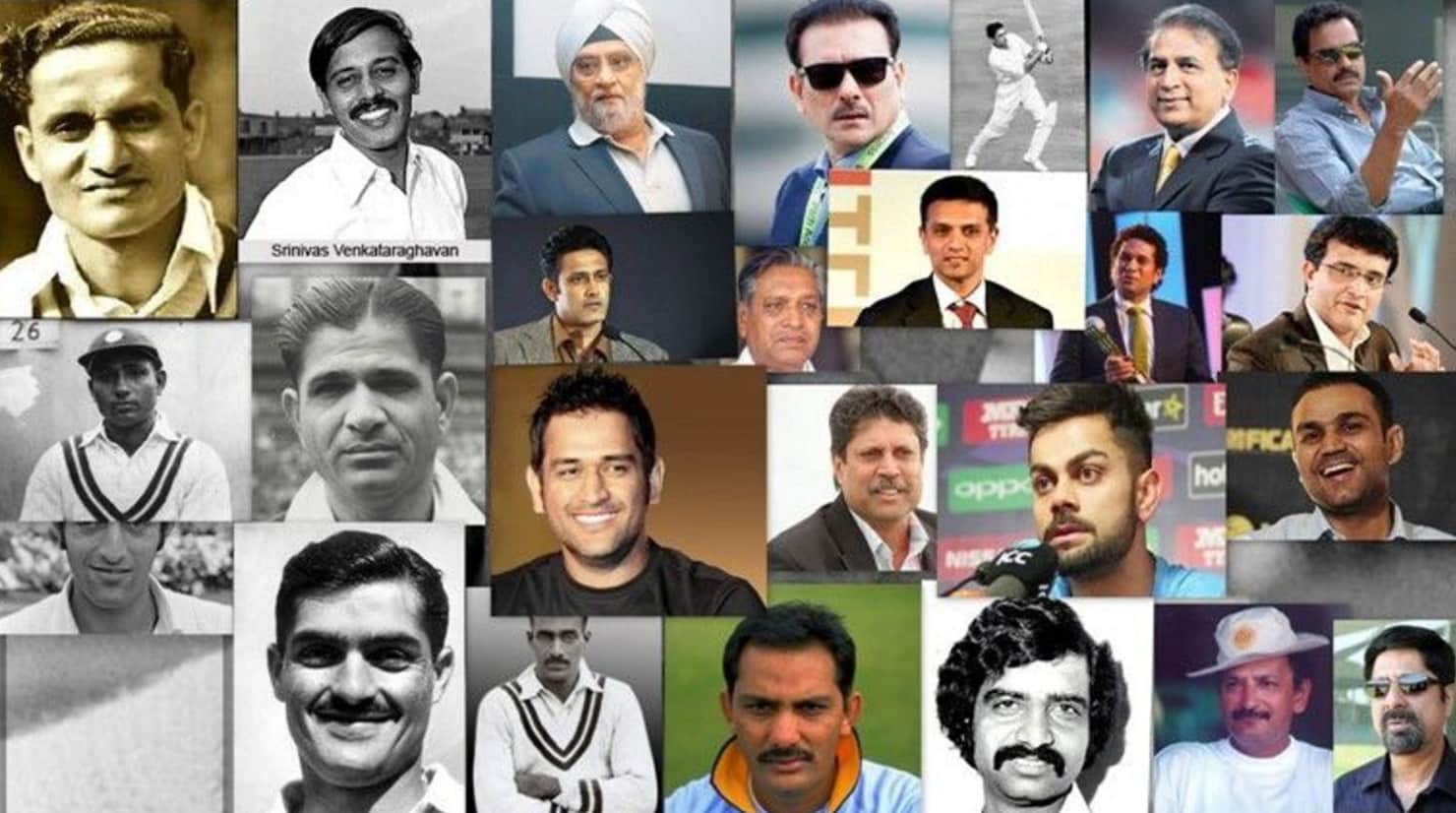
This complete A to Z Indian cricketers name list covers the full spectrum — from Anil Kumble’s 619 Test wickets to Zaheer Khan’s swing bowling, from Lala Amarnath’s pioneering century to Yashasvi Jaiswal’s explosive modern Test debuts. Every letter, every format, every era.
The Full A to Z Indian Cricketers Name List at a Glance
| Alphabet | Indian Cricketers |
|---|---|
| A | Anil Kumble, Ajinkya Rahane, Axar Patel |
| B | Bhuvneshwar Kumar, Bishan Singh Bedi, BS Chandrasekhar |
| C | Cheteshwar Pujara, Chetan Sharma, CR Rangachari |
| D | MS Dhoni, Dinesh Karthik, Deepak Chahar |
| E | Eknath Solkar |
| F | Farokh Engineer |
| G | Sunil Gavaskar, Gautam Gambhir, Gurkeerat Singh Mann |
| H | Hardik Pandya, Harbhajan Singh, Hanuma Vihari |
| I | Ishant Sharma, Irfan Pathan, Ishan Kishan |
| J | Jasprit Bumrah, Javagal Srinath, Jayant Yadav |
| K | Kapil Dev, KL Rahul, Kuldeep Yadav |
| L | Lala Amarnath, Laxman Sivaramakrishnan |
| M | Mohammad Shami, Murali Vijay, Mohammed Siraj |
| N | Navjot Singh Sidhu, Nayan Mongia, Nitish Kumar Reddy |
| O | Omkar Salvi |
| P | Prithvi Shaw, Pankaj Roy, Prasidh Krishna |
| Q | Qadir Ali |
| R | Rohit Sharma, Rahul Dravid, Ravindra Jadeja |
| S | Sachin Tendulkar, Sourav Ganguly, Suryakumar Yadav |
| T | Tilak Varma, T Natarajan, Tinu Yohannan |
| U | Umran Malik, Umesh Yadav |
| V | Virat Kohli, VVS Laxman, Venkatesh Prasad |
| W | Wriddhiman Saha, Wasim Jaffer |
| X | No mainstream international cricketers |
| Y | Yuvraj Singh, Yashasvi Jaiswal |
| Z | Zaheer Khan |
Letter A — Players Who Shaped Indian Cricket
Anil Kumble owned the Test arena for nearly two decades. His stock leg-break was effective, but it was his determination that made him exceptional — nobody in Indian cricket history has taken 619 Test wickets without being the most naturally gifted spinner in the side. He spun the ball less than most; he thought harder than all of them.
Ajinkya Rahane was built for the longest format. Patient, technically sound, and at his absolute best in overseas conditions, Rahane’s Test average in Australia rivals his home figures — a rarity for any batter from the subcontinent.
Axar Patel has become India’s most economical left-arm spinner in home Tests, with a tight line and aggressive batting at No.7 adding genuine lower-order value.
| Player | Best Format | Era |
|---|---|---|
| Anil Kumble | Test | 1990–2008 |
| Ajinkya Rahane | Test | 2011–2023 |
| Axar Patel | Test/ODI | 2015–Present |
Letter B — Players Who Shaped Indian Cricket
Bhuvneshwar Kumar found a niche that India rarely had before him — a bowler who could swing the ball in Powerplays in white-ball cricket and also contribute in Test matches. He made seam bowling respectable in a side historically reliant on spin.
Bishan Singh Bedi belonged to a golden generation of Indian spinners. His left-arm orthodox bowling had a rhythm that batsmen found almost hypnotic — until they edged or padded up and walked off.
BS Chandrasekhar bowled leg-breaks and googlies off a wrist-spinner’s action at medium pace — an unusual combination that confused batsmen who prepared for slow turn and got pace instead.
| Player | Specialty | Format |
|---|---|---|
| Bhuvneshwar Kumar | Swing bowling | ODI/T20I/Test |
| Bishan Singh Bedi | Left-arm orthodox | Test |
| BS Chandrasekhar | Wrist-spin at pace | Test |
Letter C — Players Who Shaped Indian Cricket
Cheteshwar Pujara made a career out of doing the unglamorous work. No six-hitting, no headline innings — just grinding bowlers into frustration while the rest of the batting card rebuilt around him. In Australia’s seaming conditions, he was India’s most important batter across multiple series.
Chetan Sharma secured his place in cricket history with the first hat-trick in ODI World Cup history, against New Zealand at Nagpur in the 1987 edition.
Letter D — Players Who Shaped Indian Cricket
MS Dhoni is the defining figure of Indian limited-overs cricket. Three ICC trophies as captain — the 2007 T20 World Cup, 2011 ODI World Cup, and 2013 Champions Trophy. No other captain has won all three. His finishing ability, his calm under pressure, and his wicketkeeping instincts made him one of the most complete cricket figures the sport has produced.
Dinesh Karthik reinvented himself as a T20 finisher in his mid-thirties — a second act rare in any sport. His last-ball six to win the 2018 Nidahas Trophy remains one of T20 cricket’s most visceral moments.
Deepak Chahar is among the best swing bowlers in Indian white-ball cricket, particularly dangerous in the Powerplay when the fielding restrictions give him room to move the ball.
| Player | Best Format | Defining Role |
|---|---|---|
| MS Dhoni | ODI/T20I | Captain-finisher |
| Dinesh Karthik | T20I | Death-overs finisher |
| Deepak Chahar | ODI/T20I | Powerplay swing |
Letter E — Players Who Shaped Indian Cricket
Eknath Solkar was not a headline batter or a wicket-taking bowler. He was India’s premier close-in fielder of the 1970s — a man who positioned himself at forward short leg without hesitation and took catches that changed Test matches. Fielding did not appear in the stats the way it does now, but Solkar’s contribution was real.
Letter F — Players Who Shaped Indian Cricket
Farokh Engineer was India’s first truly dynamic wicketkeeper-batsman. He played with a flair that was unusual for the 1960s and 70s, and his decision to play county cricket for Lancashire helped raise awareness of Indian cricket in England at a time when the sport had fewer broadcast touchpoints.
Letter G — Players Who Shaped Indian Cricket
Sunil Gavaskar faced the West Indian pace battery of the 1970s and 80s — Holding, Roberts, Garner, Marshall — without a helmet and without retreat. His 10,000 Test runs came before protective equipment was standard. He made technique his armour.
Gautam Gambhir was the player India needed in the finals. His innings in the 2007 T20 World Cup final and the 2011 ODI World Cup final — both under pressure, both on flat pitches where the team needed someone to bat deep — were decisive in India’s victories.
| Player | Best Format | Signature Trait |
|---|---|---|
| Sunil Gavaskar | Test | Technical defence |
| Gautam Gambhir | ODI/T20I | Big match temperament |
Letter H — Players Who Shaped Indian Cricket
Hardik Pandya filled the gap in India’s setup that had existed for years — a fast-bowling all-rounder who could bat at No.6 and bowl at genuine pace. His ability to score 30 runs quickly or take two wickets in a spell gives India options no previous squad had.
Harbhajan Singh took 417 Test wickets with off-spin that turned sharply and was backed by an aggressive mindset. The 2001 series against Australia — where he took 32 wickets across three Tests — is the benchmark moment for Indian spin bowling in the modern era.
Letter I — Players Who Shaped Indian Cricket
Ishant Sharma is India’s most-capped pace bowler in the current era. Height, awkward bounce, and adaptability made him effective in the subcontinent and overseas. His 100-Test milestone marked a career of quiet, reliable contribution.
Irfan Pathan had a hat-trick in his arsenal — three first-ball wickets in a single over against Pakistan in Karachi, 2006. That remains one of the most striking individual bowling performances in recent Test history.
Ishan Kishan plays T20 cricket the way it is meant to be played — without hesitation. His ODI double century off 210 balls in 2023 was a statement innings.
Letter J — Players Who Shaped Indian Cricket
Jasprit Bumrah is the clearest answer to the question of who India’s best current fast bowler is. Unorthodox action, 145+ km/h pace, swing, reverse swing, and ruthless yorker execution under pressure. He is the rare bowler who is just as dangerous in the final over of a T20 as he is on day one of a Test.
Javagal Srinath was India’s first genuine express pacer — a time when Indian cricket was so associated with spin that a 140 km/h bowler from Mysore genuinely surprised world batsmen.
Letter K — Players Who Shaped Indian Cricket
Kapil Dev remains the only player in history to score 5,000 Test runs and take 400 Test wickets. He captained India to the 1983 World Cup, making the most famous catch in cricket history off Viv Richards to dismiss the danger man before he could wreck India’s total. The sport changed in India on that one afternoon.
KL Rahul has played every role asked of him — Test opener, ODI middle-order anchor, T20 finisher, wicketkeeper — and done it with technical elegance across all three formats.
Kuldeep Yadav is India’s best attacking spinner in the current white-ball setup. His ability to dismiss right-handers with the googly and left-handers with the stock delivery gives India variation that no other spinner provides.
Letter L — Players Who Shaped Indian Cricket
Lala Amarnath scored India’s first Test century in 1933–34. He captained the national side and his two sons — Surinder and Mohinder — also played Test cricket, making the Amarnaths the most decorated cricketing family in Indian history.
Letter M — Players Who Shaped Indian Cricket
Mohammad Shami is India’s most complete fast bowler in the current era outside Bumrah. His ability to take wickets in clusters, reverse-swing an old ball, and maintain line and length over long spells makes him equally valuable in Tests and 50-over cricket.
Mohammed Siraj emerged as a consistent performer on India’s 2020–21 Australia tour — a breakout series that established him as a Test-quality new-ball option. He has since become one of India’s primary red-ball seamers.
Letter N — Players Who Shaped Indian Cricket
Navjot Singh Sidhu was an opener in the 1980s and 90s who hit fast bowlers straight back over their heads before it was fashionable. His aggressive batting style was ahead of its era.
Nitish Kumar Reddy represents the next generation — a young all-rounder from Andhra Pradesh who made his international debut in 2024 and showed batting quality beyond his years.
Letter P — Players Who Shaped Indian Cricket
Pankaj Roy and Vinoo Mankad set a world record opening partnership of 413 against New Zealand in 1955–56 — a record that lasted 52 years. Roy’s composure over a long innings set the template for Indian opening batsmanship.
Prithvi Shaw scored a century on Test debut at seventeen — one of the youngest to do so for India. His instinctive attacking game makes him one of the most watchable openers when he is in form.
Prasidh Krishna has built a reliable ODI career on high-bounce deliveries that tend to find edges from batsmen expecting fuller lengths.
Letter R — Players Who Shaped Indian Cricket
Rohit Sharma holds the record for the highest individual score in ODI cricket — 264 against Sri Lanka in 2014. He is also the only batter to score three ODI double centuries. As a Test opener since 2019, he has proven equally effective in the format’s purest form.
Rahul Dravid averaged 52.31 over 164 Tests, with 13,288 runs. The Wall was not a nickname for dullness — it was a tribute to the number of times he stood between India’s collapse and a competitive score.
Ravindra Jadeja is the most complete all-rounder in Indian Test cricket today — reliable wicket-taking left-arm spin, aggressive lower-order batting, and fielding that regularly produces direct-hit run-outs that leave crowds silent with disbelief.
| Player | Best Format | Career Highlight |
|---|---|---|
| Rohit Sharma | ODI/Test | Three ODI double centuries |
| Rahul Dravid | Test | 13,288 Test runs at 52.31 |
| Ravindra Jadeja | Test | Premier all-rounder |
Letter S — Players Who Shaped Indian Cricket
Sachin Tendulkar played 200 Tests, 463 ODIs, and scored 100 international centuries. The numbers take a moment to settle. He batted from age 16 to 40 at the highest level, under more expectation than any cricketer before or since.
Sourav Ganguly changed how India batted and how India thought about themselves. Under his captaincy, the side started winning overseas — not occasionally, but as a consistent expectation.
Suryakumar Yadav redefined what T20 batting can look like. Ramp shots, scoops over fine leg, inside-out drives — SKY plays shots that are not supposed to work at international level, and they do.
| Player | Career Impact | Format |
|---|---|---|
| Sachin Tendulkar | 100 international centuries | All formats |
| Sourav Ganguly | Transformed India’s overseas mentality | All formats |
| Suryakumar Yadav | World No.1 T20I batter | T20I |
Letter T — Players Who Shaped Indian Cricket
Tilak Varma scored consecutive T20I centuries on the West Indies tour in 2023 — a feat that announced him as a future middle-order fixture for India across formats.
T Natarajan mastered the left-arm yorker in IPL cricket and earned an international call-up after being India’s net bowler on the 2020–21 Australia tour. Circumstances aside, his accuracy at the death separates him from most options.
Letter U — Players Who Shaped Indian Cricket
Umran Malik touched 157 km/h in an IPL match — the fastest delivery bowled by an Indian in domestic T20 cricket. Raw pace of that order is a rarity, and India have worked to harness it at international level.
Umesh Yadav was a reliable Test seamer for over a decade, particularly effective with the new ball in helpful conditions and capable of generating steep bounce from a full length.
Letter V — Players Who Shaped Indian Cricket
Virat Kohli averaged over 50 in Test cricket for a sustained period and holds the record for most ODI centuries (50 and counting). His intensity — both personal and competitive — reset the benchmark for how Indian cricketers approach fitness, preparation, and performance.
VVS Laxman played the most famous innings in Indian Test cricket. His 281 at Eden Gardens in 2001, alongside Rahul Dravid, turned a follow-on deficit against Australia into a victory that redefined what India were capable of.
Letter W — Players Who Shaped Indian Cricket
Wriddhiman Saha is considered by many coaches and former players as the finest pure wicketkeeper India has produced in the modern era. His work standing up to the stumps against spin, in particular, set a consistently high standard.
Wasim Jaffer scored over 12,000 Ranji Trophy runs across a domestic career that stretched two decades. He remains the benchmark for consistency in India’s domestic first-class structure.
Letter Y — Players Who Shaped Indian Cricket
Yuvraj Singh was India’s finest white-ball all-rounder for a decade. Six sixes in a Stuart Broad over. Player of the Tournament at the 2011 World Cup — while unknowingly battling cancer, a detail that adds weight to every boundary he hit during that campaign.
Yashasvi Jaiswal scored back-to-back double centuries against England in early 2024 — the kind of series that announces a generational talent to the world.
Letter Z — Players Who Shaped Indian Cricket
Zaheer Khan was India’s best fast bowler of the 2000s. Not the fastest — he relied on swing, cutters, and reverse swing rather than pure pace. His 311 Test wickets reflected intelligence as much as skill, and his left-arm angle made him awkward for right-handers who expected conventional seam movement.
FAQs
- Q1: Which Indian cricketer has played the most Test matches?
Sachin Tendulkar holds the record with 200 Test appearances — the most by any cricketer in history. He also holds records for most Test runs (15,921) and most Test centuries (51).
- Q2: Who was the first Indian to take a Test hat-trick?
Harbhajan Singh took the first Test hat-trick by an Indian, against Australia at Eden Gardens in March 2001. It was also the first hat-trick in India vs Australia Test history.
- Q3: Which Indian player has the highest individual ODI score?
Rohit Sharma scored 264 against Sri Lanka in Kolkata in November 2014 — the highest individual score in the history of ODI cricket.
- Q4: Who is the fastest Indian bowler on record?
Umran Malik bowled a delivery clocked at 157 km/h during an IPL match, making him the fastest Indian bowler on record in domestic T20 cricket. Jasprit Bumrah is considered the most effective in international cricket.
- Q5: Which Indian cricketer made their Test debut at the youngest age?
Sachin Tendulkar debuted for India in Test cricket at the age of 16 years and 205 days in November 1989, against Pakistan in Karachi — making him one of the youngest Test cricketers in history.
- Q6: Who holds the most Ranji Trophy runs among Indian cricketers?
Wasim Jaffer holds the record for most runs in the Ranji Trophy, having accumulated over 12,000 runs in India’s premier first-class tournament across a career spanning two decades.
Conclusion:
Indian cricket’s alphabet is rich because the sport itself spans over ninety years of Test history and multiple format revolutions.
The players above are not just names — they are milestones in a story still being written.
From Lala Amarnath’s first century to Yashasvi Jaiswal’s modern assault on Test bowling attacks, every letter in this list connects to a player who changed something. Format, expectation, record, or attitude.