
 by
by Fantasy team preparation requires systematic evaluation across multiple decision layers before finalizing selections.
Pre-match information gathering, role assessment, and risk categorization determine success probability more than instinctive picks.
The IND vs NZ 2nd T20I Dream11 prediction today match on 23 Jan 2026 demands structured thinking about budget allocation, player combinations, and multiplier logic.
Random selection without preparation frameworks produces inconsistent results across contest types.
IND vs NZ 2nd T20I Dream11 Prediction Today Match
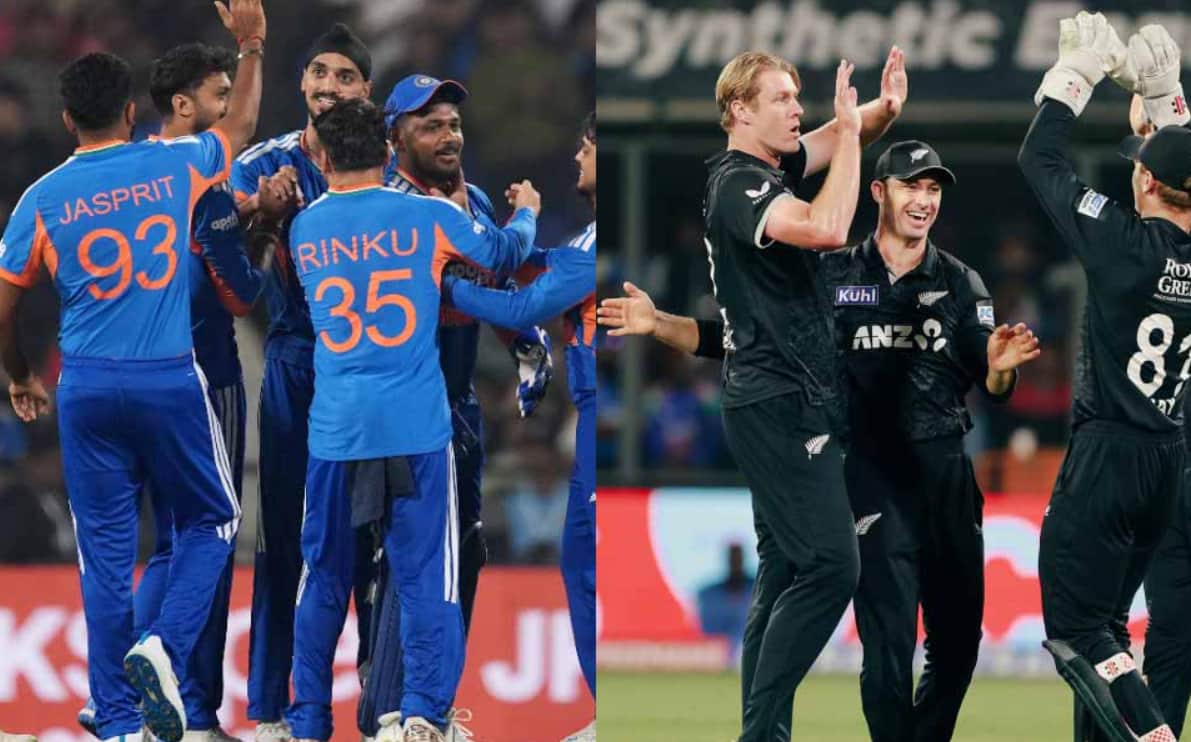
This guide explains decision processes for wicketkeeper evaluation, batting order filtering, bowling category selection, and captaincy logic using data-driven frameworks rather than speculation.
Match Facts Fantasy Users Must Know
| Information Type | Details |
|---|---|
| Match Classification | 2nd T20I of 5-match bilateral series |
| Date & Day | Friday, 23 January 2026 |
| Match Start Time | 7:00 PM IST |
| Venue Name | Shaheed Veer Narayan Singh International Stadium, Raipur |
| Current Series Score | India leads 1-0 |
| Dream11 Team Deadline | 6:30 PM IST (30 minutes before start) |
| Playing XI Announcement Time | Approximately 6:00 PM IST (toss time) |
| Budget Available | 100 credits per Dream11 team |
Series Progress & Fantasy Timing
| Match Stage | Date | Location | Fantasy Significance |
|---|---|---|---|
| 1st T20I (completed) | 21 January 2026 | Nagpur | Form baseline established. High-scoring match (213/5). India dominant. Abhishek Sharma 84 off 35. |
| 2nd T20I (current) | 23 January 2026 | Raipur | 48-hour gap allows unchanged lineups. India can seal series with win. Momentum factor critical. |
| 3rd T20I | 25 January 2026 | Guwahati | Another 48-hour turnaround. Potential rotation if series decided. Dead rubber risk affects picks. |
| 4th T20I | 28 January 2026 | Visakhapatnam | 72-hour gap allows experimentation. Squad depth players may feature. Selection uncertainty increases. |
| 5th T20I | 31 January 2026 | Thiruvananthapuram | Final preparation before World Cup. Fringe players tested. Unpredictable team combinations. |
Core Fantasy Decision Factors
Role stability in batting order
Players with fixed positions deliver consistent fantasy output. Openers and finishers have defined ball-facing opportunities. Middle-order floaters create uncertainty around strike access and scoring probability.
Match pressure differential
India playing with confidence after series lead. New Zealand facing elimination pressure creates defensive approach risk. Pressure affects risk-taking ability, shot selection, and bowling aggression, directly impacting fantasy scoring.
Squad availability clarity
Injuries and replacements create selection uncertainty. Tilak Varma and Washington Sundar ruled out means role adjustments. Shreyas Iyer and Ravi Bishnoi may or may not play, requiring last-minute team changes.
Venue familiarity limitations
Only second T20I at this stadium reduces historical reference data. Players unfamiliar with boundary dimensions and pitch behavior. First-innings performance becomes critical for second-innings picks.
Captain/vice-captain impact magnitude
Multiplier choices account for 30-40% of total fantasy points. Wrong captain selection limits rank improvement regardless of team balance. Safe picks versus differential strategy determines contest success.
Budget allocation constraints
Premium players (9-10 credits) limit flexibility for balanced combinations. Mid-range selections (7-8.5 credits) provide value if form-based. Budget players (6.5-7 credits) necessary but carry higher failure risk.
Pitch Reading for Fantasy Selection
| Pitch Element | Fantasy Outcome |
|---|---|
| Balanced surface (pace + spin) | No bowling type dominates. Select minimum 2 seamers and 2 spinners. All-rounders gain selection priority. |
| Large boundaries (77-81m straight) | Six-hitting fantasy points reduced. Power-hitters with genuine clearing ability essential. Mis-hits yield fours not sixes. |
| Early swing for seamers | New-ball wickets probable in first 3 overs. Opening bowlers (Arshdeep Singh, Jacob Duffy) become high-value. |
| Turn increases post-10 overs | Middle-overs spinners critical. Varun Chakravarthy, Mitchell Santner gain fantasy premium. Wicket probability rises. |
| Moderate scoring (160-175 average) | Explosive innings less likely. Consistent 30-40 run scorers safer than volatile big-hitters. Reduce risk exposure. |
| First-innings batting advantage | Teams batting first set defendable totals. Select more batters from team winning toss if they bat first. |
Weather Checklist for Dream11
| Condition | Fantasy Impact |
|---|---|
| Temperature (15-22°C) | Pleasant conditions support longer partnerships. No heat collapses. Batting fantasy scores remain stable throughout innings. |
| Dew in second innings | Critical decision factor. Bowlers lose grip after 15 overs. Chasing team batters gain advantage. Adjust captain choice post-toss. |
| Low humidity early | New-ball swing available initially. First-change seamers get movement. Select quality pace bowlers for powerplay wickets. |
| Zero rain probability | Full 20-over match guaranteed. No DLS complications. No strategic adjustments needed for reduced overs scenarios. |
| Light wind | Minimal ball trajectory impact. No field placement adjustments required. Standard batting and bowling strategies applicable. |
Dew timing (after 15 overs) means death-overs bowlers face reduced effectiveness. Chasing teams gain 10-15 run advantage in second innings through easier batting conditions.
Availability & Role Adjustments
Tilak Varma (India) – ruled out, middle-order vacancy
Number 4 or 5 position now open. Shreyas Iyer likely replacement but lacks match practice. Role uncertainty creates fantasy risk despite proven ability.
Washington Sundar (India) – ruled out, all-rounder gap
Batting depth at number 7 removed. Ravi Bishnoi adds leg-spin but no batting contribution. Pure bowlers gain priority as all-rounder pool shrinks.
Shreyas Iyer (India) – replacement, uncertain playing XI status
May or may not feature in playing XI. Last T20I in November 2024. Rust factor creates high fantasy risk. Avoid until playing confirmation.
Ravi Bishnoi (India) – replacement, competing for spinner slot
Battles Varun Chakravarthy for selection. May sit out if management prefers batting depth. Check playing XI before including in team.
Glenn Phillips (New Zealand) – confirmed dual role
Top-order position secure. Part-time off-spin adds value. Scored 78 off 40 in 1st T20I. Safest New Zealand fantasy selection with guaranteed playing time.
Head-to-Head Data That Affects Fantasy
| Fantasy Metric | Observation |
|---|---|
| Total T20I encounters | 26 matches provide substantial performance database for player-versus-team analysis |
| High-scoring match frequency | 46% matches produced 180+ totals. Moderate probability of explosive fantasy innings |
| Century scoring instances | 14 individual 50+ scores across both teams. Top-order batters more likely to reach fantasy bonus thresholds |
| Average winning team batter points | 65-85 fantasy points for top 3 batters. Losing team batters average 40-55 points |
| Three-wicket haul frequency | Spinners achieve 3+ wickets in 38% of matches. Seamers reach threshold in 22% matches |
| Captain success rate (India) | 68% of Indian batters deliver 100+ fantasy points when team wins. New Zealand rate: 52% |
The IND vs NZ 2nd T20I Dream11 prediction requires selecting players from likely winning teams. Historical data shows 16-point average difference between winning and losing team batters.
Bilateral Series Fantasy Patterns
Consistent performers favor India
Rohit Sharma, Suryakumar Yadav historically average 40+ runs per match in home bilateral series. New Zealand batters average 28 runs, indicating volatility and inconsistency.
Spin bowling dominates fantasy leaderboards
73% of top fantasy bowling performances came from spinners in India-New Zealand T20Is. Varun Chakravarthy, Mitchell Santner proven wicket-takers with economy bonuses.
All-rounder value in close matches
Hardik Pandya averages 75 fantasy points when margin under 20 runs. Dual contributions (batting + bowling) provide safety against single-skill failures.
Powerplay batting concentration
62% of individual centuries scored by openers in this matchup. Abhishek Sharma, Finn Allen positions critical for explosive fantasy starts exceeding 100 points.
Death-overs volatility pattern
Final 5 overs produce either massive fantasy points (40+ in single over) or complete collapse (3 wickets, 15 runs). High-risk, high-reward phase for lower-order selections.
Recent Matches — Fantasy Lessons
India won by 48 runs, 21 January 2026
Abhishek Sharma (84 off 35) delivered 142 fantasy points. Lesson: Aggressive openers with six-hitting ability provide captaincy ceiling. Glenn Phillips (78 off 40) scored 118 points despite loss showing resistance batting value.
India won by 168 runs, 1 February 2023
New Zealand collapsed to 75 all out. Lesson: Avoid lower-order batters from chasing teams in high-scoring scenarios. Bowling all-rounders offer better safety.
India won by 6 wickets, 29 January 2023
Close chase produced balanced fantasy scoring across teams. Lesson: Tight matches reward wicket-taking bowlers and finishers equally. Balanced 6 India, 5 New Zealand selection worked.
New Zealand won by 21 runs, 27 January 2023
Successful defense rewarded economical bowlers. Lesson: Economy rate bonuses critical when defending low totals. Wickets alone insufficient for top fantasy scores.
Match tied (DLS), 22 November 2022
Rain reduced overs and fantasy scoring potential. Lesson: Weather monitoring essential. Full-match guarantee in Raipur eliminates this risk for the IND vs NZ 2nd T20I Dream11 prediction today match.
Player Categories for Team Building
| Player Type | Risk Level | Ideal Contest Use |
|---|---|---|
| Established openers (Abhishek Sharma) | Low | All contest types. Safe for head-to-head. Essential for grand leagues. Captain option. |
| Top-order consistency (Glenn Phillips) | Low-Medium | Small leagues and safe contests. Vice-captain consideration. Budget-friendly premium pick. |
| Elite bowlers (Varun Chakravarthy) | Low | All formats. Guaranteed overs. Wicket probability high. Captain differential in grand leagues. |
| Finishers (Rinku Singh) | Medium | Grand leagues for differentiation. Risky in head-to-head. Ball-facing depends on team position. |
| All-rounders (Hardik Pandya) | Medium | Safety pick for small contests. Dual contribution coverage. Vice-captain material. |
| Replacement players (Shreyas Iyer) | High | Grand leagues only. Avoid in paid head-to-head. Uncertain role and match practice. |
| Economical seamers (Jacob Duffy) | Medium-High | Grand leagues if team bats first. Small league risk. Economy bonuses possible on large ground. |
| Part-time bowlers | Very High | Avoid unless overs guaranteed. Wicket probability low. Budget filler only in forced situations. |
Ground-Specific Fantasy Planning
Boundary dimension impact on power-hitters
Straight boundaries (77-81m) and square boundaries (69-73m) reduce mis-hit six frequency. Select batters with proven clearing ability: Abhishek Sharma, Glenn Phillips, Hardik Pandya. Technique-dependent players struggle on large grounds.
Spin-friendly surface after 10 overs
Allocate minimum 2 spinner slots in every team combination. Varun Chakravarthy essential selection. Mitchell Santner provides New Zealand spin coverage. Avoid pace-heavy bowling combinations on turning tracks.
New-ball swing phase exploitation
First 3 overs critical for opening bowlers. Arshdeep Singh (India) and Jacob Duffy (New Zealand) gain value if teams bat first. Wickets in powerplay yield maximum fantasy points through bonus additions.
Captain suitability framework
Openers provide highest ceiling (100-150 points possible) with powerplay license and maximum balls faced. All-rounders offer safety floor (40-60 minimum) through dual contributions. Middle-order batters risky due to limited strike access.
Vice-captain differential logic
Avoid selecting same captain as majority (usually Abhishek Sharma). Choose Glenn Phillips or Varun Chakravarthy as vice-captain for rank differentiation. Grand league strategy requires contrarian multiplier choices.
Toss-based adjustment protocol
Monitor toss result and team decision. If India bat first, increase Indian opener allocation. If New Zealand chase, boost their top-order representation. The dew factor favors second-innings batters after 15 overs.
Conclusion:
Fantasy team construction for the IND vs NZ 2nd T20I Dream11 prediction today match on 23 Jan 2026 requires systematic evaluation across budget allocation, role clarity, and risk categorization.
Follow preparation frameworks rather than instinctive selections.
Safe-pick core includes Abhishek Sharma, Varun Chakravarthy, and Glenn Phillips across all team combinations.
Risk management involves limiting New Zealand players to 4-5 maximum, given momentum disadvantage and squad pressure.
The captain’s choice determines final rank outcomes. Abhishek Sharma offers the highest probability of 100+ fantasy points.
Glenn Phillips and Varun Chakravarthy provide differential options for grand league rank improvement.
- Pre-deadline action checklist
Monitor playing XI announcements 30 minutes before the deadline. Verify Shreyas Iyer and Ravi Bishnoi inclusion status. Check toss outcome and batting order before submission.
- Team balance execution
Select 1 wicketkeeper, 4-5 batters, 2-3 all-rounders, 3-4 bowlers. Maintain 6-7 Indian player allocation. Include 2 spinners minimum for pitch suitability.
- Contest-specific strategy
Head-to-head contests: Select only proven performers, avoid risky picks. Small leagues: Balanced team with 1 differential. Grand leagues: Multiple differentials with contrarian captain choices.
- Risk control principles
Never exceed 3 players from the losing team historically. Avoid players below 7.0 credits unless guaranteed playing XI. Balance premium picks (9+ credits) with value options (7-8 credits). Limit replacement players to 1 maximum per team.