 by
by Picture a ground where the straight boundary barely reaches 55 metres. Batters can clear it with ease.
Bowlers need clever plans to survive. That’s Eden Park in Auckland, the smallest cricket ground in the world by boundary.
Cricket doesn’t demand massive stadiums. Some of the best matches happen at compact venues.
Whether it’s tight boundaries or limited seating, these grounds create unique challenges and unforgettable moments.
Smallest Cricket Ground in the World By Boundary and By Capacity
The Record for Shortest Cricket Boundary
Eden Park takes the crown here. Its straight boundary measures just 55 metres.
New Zealand picked this venue for limited-overs cricket. The dimensions suit fast-paced matches where runs flow freely.
That 2018 T20I between Australia and New Zealand showed what happens with short boundaries.
Australia posted 245/5. New Zealand had already made 243/6. Both teams knew the bowlers were fighting a losing battle from the start.
Five Grounds With the Tightest Boundaries
| Ground Name | City | Boundary Distance | Direction |
|---|---|---|---|
| Eden Park | Auckland | 55m | Straight |
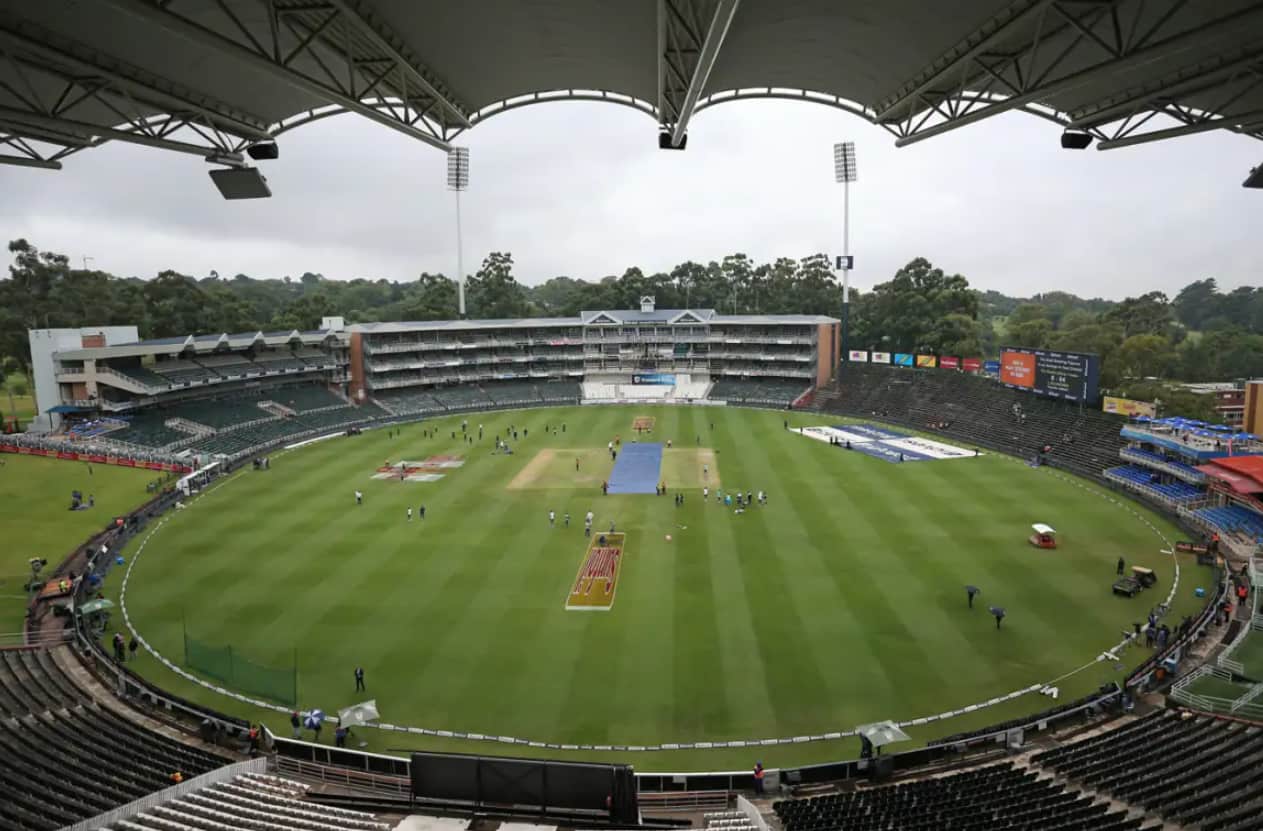
| The Wanderers | Johannesburg | 64m | Square |
| Lord’s | London | 65m | Square |
| Eden Gardens | Kolkata | 65m | Square |
| Holkar Stadium | Indore | 68m | Straight |
Eden Park Sets the Standard
Auckland’s Eden Park remains unmatched. The 55-metre straight boundary makes it a nightmare for bowlers. Every delivery needs precision. One mistake goes sailing over the rope.
Limited overs matches dominate the schedule here. Test cricket doesn’t work as well. The ground rewards aggressive batting. New Zealand uses it when they want high-scoring entertainment.
The Wanderers Keep Things Tight
Johannesburg’s Wanderers has a 64-square-metre boundary. It’s short enough to keep things interesting.
That famous 2006 ODI saw both teams pass 400 runs. The Wanderers proved that small boundaries can produce historic matches.
Square boundaries change the game differently from straight ones. Batters pull and cut more freely.
Fielding captains stack the leg side or off side. The tactical options shift completely.
Lord’s Stays Compact Despite Its History
Lord’s has been around for centuries. The shortest square boundary sits at 65 metres.
Modern cricket has evolved. The ground hasn’t expanded much. That 1800s layout still shapes matches today.
You wouldn’t call the Lord’s a run fest usually. The pitch does more work than the boundaries.
But when conditions favour batting, those 65-metre boundaries come into play quickly.
Eden Gardens Balances Small and Big
Kolkata’s Eden Gardens looks enormous on broadcasts. The 66,000 capacity creates that illusion.
The actual playing area is smaller. A 65-metre square boundary keeps it among the world’s smallest cricket stadiums by boundary.
Most space goes to seats rather than the playing area. That creates noise and atmosphere.
Eden Gardens proves that a ground can feel big and small at the same time.
Holkar Stadium Rounds Out the List
Indore got international cricket in 2006. England visited for an ODI.
Since then, the Holkar Stadium has hosted all three formats. The 68-metre straight boundary makes it bowler-unfriendly.
India rotates venues across the country. Smaller cities get their chance.
Holkar Stadium serves that purpose well. The boundaries help create exciting cricket for local fans.
Where You’ll Find the Smallest Crowd Capacity?
The Grange Club in Edinburgh holds just 5,000 people. Scotland plays most internationals here.
It’s the smallest cricket ground in the world by capacity for regular international matches.
Scotland’s cricket is growing. They’re producing better players and results.
Eventually, they might outgrow this venue. Right now, it fits their needs perfectly.
Five Stadiums With Limited Seating
| Venue | Country | Total Capacity | First International |
|---|---|---|---|
| The Grange Club | Scotland | 5,000 | 1999 |
| Stormont Cricket Ground | Ireland | 6,000 | 2006 |
| Maple Leaf Cricket Club | Canada | 7,000 | 2008 |
| Traeger Park | Australia | 7,200 | 2015 |
| Queens Sports Club | Zimbabwe | 12,497 | 1994 |
The Grange Club Leads Edinburgh’s Cricket
Scotland faced Bangladesh here in 1999. That ODI marked the ground’s international debut.
The 5,000 capacity works for Scotland’s current status. Emerging nations need venues that match their development stage.
Small crowds bring everyone closer together. Fans and players share the same space.
There’s no hiding in a 5,000-seat venue. Every cheer and groan echoes clearly.
Stormont Serves Northern Ireland
Belfast’s Stormont Cricket Ground holds 6,000 fans. Ireland gained Test status recently.
They still use Stormont for white-ball matches. England played an ODI here in 2006.
Dublin gets bigger matches. Stormont handles regular fixtures.
Ireland’s cricket infrastructure is still developing. Multiple small venues help spread the game across the country.
Maple Leaf Club Represents Canada
Ontario’s Maple Leaf Cricket Club opened back in 1954. Capacity sits at 7,000.
Canada has appeared in World Cups since 1979. They remain an emerging nation.
The Maple Leaf Club hosted its first international in 2008 against Bermuda.
Canada’s cricket grows slowly. The club provides a home base.
It’s their second international venue. For now, 7,000 seats handle demand well.
Traeger Park Brings Cricket to Central Australia
Alice Springs got international cricket through Traeger Park. The 7,200 capacity started hosting in 2015.
First-class and Big Bash matches happen here. Australia needed more venues as schedules got packed.
This ground serves a unique purpose. Central Australia deserves live cricket too.
Traeger Park makes that possible. Players experience different conditions. Fans get access to top-level matches.
Queens Sports Club Anchors Bulawayo
Zimbabwe’s cricket faces constant challenges. Queens Sports Club in Bulawayo stays committed.
Capacity recently jumped from 9,000 to 12,497. The ground became Zimbabwe’s third Test venue in 1994 against Sri Lanka.
Loyal fans pack this stadium despite everything. Zimbabwe cricket survives partly because of venues like this. The atmosphere compensates for limited facilities.
Expert Insight: The Role of Smaller Venues
The ICC doesn’t set hard rules on ground size. They check safety standards and facilities instead.
Revenue matters for big tournaments. An India versus Pakistan World Cup match needs maximum seating.
But regular internationals work fine at smaller grounds. England’s One Day Cup uses outgrounds during The Hundred.
Bigger stadiums host the main event. Smaller venues handle secondary competitions.
I’ve been to these outgrounds many times. The experience beats big stadiums in some ways.
You’re right there with the action. You hear players talking.
Every boundary feels personal. Only true cricket fans make the trip. That creates a special atmosphere.
Tactical View: How Boundary Size Affects Strategy?
Short boundaries force bowlers to rethink everything. Yorkers become essential.
Length balls disappear. The margin for error shrinks dramatically.
Batters adjust too. They know certain areas are easy boundaries. Shot selection changes.
Risk calculation shifts. A 65-metre boundary versus an 80-metre one completely alters the game plan.
Captains need different field settings. You can’t protect every area with short boundaries.
Choices become tougher. Do you defend the shorter side or the longer one? These decisions shape match outcomes.
Understanding Stadium Selection for Major Events
World Cup organizers want big crowds. That means big stadiums.
A 5,000-seat venue can’t host a semifinal. The ICC balances quality and capacity.
Smaller stadiums get group matches and early rounds. Knockout stages need larger venues.
This system spreads cricket around while ensuring major matches get proper stages.
Emerging nations benefit from this approach. They host matches that fit their infrastructure.
Cricket reaches new audiences. The sport grows globally through this mixed approach.
FAQs
- Which ground has the world’s smallest boundary?
Eden Park in Auckland has the shortest boundary at 55 metres straight. This makes it the smallest cricket ground in the world by boundary measurement.
- What’s the smallest stadium by seating capacity?
The Grange Club in Edinburgh holds only 5,000 spectators. It’s Scotland’s primary international venue despite the limited capacity.
- Do short boundaries always mean high scores?
Not always, but usually. Eden Park saw both teams score 240+ in a T20I. Short boundaries help batters, but pitch conditions still matter.
- Can small grounds host Test matches?
Yes. Holkar Stadium and Queens Sports Club both host Tests. The ICC doesn’t set minimum size requirements for different formats.
- Why don’t all countries use big stadiums?
Emerging nations can’t fill 50,000 seats. Smaller venues make financial sense. They also create a better atmosphere for developing cricket markets.
Final Thoughts:
The smallest cricket ground in the world by boundary and capacity proves size isn’t everything.
Eden Park’s 55-metre boundary creates thrilling matches. The Grange Club’s 5,000 seats give Scotland a home.
These venues serve cricket in different ways. Some create high-scoring entertainment.
Others provide intimate settings for emerging nations. Each ground fills a specific role.
World’s smallest cricket stadiums by boundary and capacity deserve recognition.
They’re not inferior to massive venues. Just different. Cricket needs this variety to thrive globally.
Also Check: